The Dome Blogs
Our official blog with news, technology advice, and business culture.

Blogs


How to Build a Successful Online Store
The rapid growth of e-commerce has transformed the way businesses sell products and interact with customers. Consumers now expect the convenience of shopping online, comparing products, reading reviews, and completing purchases from the comfort of their homes. As a result, having an online store is no longer just an option—it is a critical component of business growth and success.
However, simply launching an online store does not guarantee results. A successful e-commerce business requires careful planning, user-friendly design, secure payment systems, effective marketing strategies, and exceptional customer experiences.
Whether you are launching your first online business or expanding an existing brand, understanding the key elements of a successful online store can help you attract customers, increase sales, and build long-term profitability.
Understanding the Importance of an Online Store
An online store allows businesses to reach customers beyond geographical limitations and operate 24 hours a day, seven days a week.
Benefits of having an online store include:
- Wider market reach
- Lower operational costs
- Increased sales opportunities
- Better customer convenience
- Improved brand visibility
- Access to valuable customer insights
With more consumers shopping online than ever before, businesses that invest in e-commerce are better positioned for future growth.
Define Your Business Goals and Target Audience
Before building an online store, it is important to establish clear business objectives.
Consider questions such as:
- What products or services will you sell?
- Who are your ideal customers?
- What problems do your products solve?
- What makes your business different from competitors?
Understanding your target audience helps you create a store that meets customer expectations and supports your business goals.
Choose the Right E-Commerce Platform
Selecting the right e-commerce platform is one of the most important decisions in the development process.
A reliable platform should provide:
- User-friendly management tools
- Secure payment integration
- Mobile responsiveness
- Inventory management
- Order tracking
- Scalability for future growth
The platform should align with your business requirements and be flexible enough to accommodate future expansion.
Create a Professional Website Design
First impressions matter in e-commerce.
A professional and visually appealing website helps build trust and encourages visitors to explore your products.
A successful online store should have:
- Clean and modern design
- Easy navigation
- Consistent branding
- High-quality visuals
- Fast-loading pages
- Mobile-friendly layout
An organized and attractive website improves user experience and increases conversion rates.
Focus on Mobile Responsiveness
A significant portion of online shopping now occurs through smartphones and tablets.
If your website is not optimized for mobile devices, potential customers may leave before making a purchase.
Mobile-responsive design ensures that your store functions smoothly across different screen sizes and devices, providing a consistent shopping experience.
Use High-Quality Product Images
Customers cannot physically examine products when shopping online, making product images extremely important.
High-quality product photos should:
- Show products clearly
- Include multiple viewing angles
- Highlight important details
- Maintain consistent quality
Professional images increase customer confidence and help improve purchasing decisions.
Write Compelling Product Descriptions
Product descriptions play a major role in converting visitors into buyers.
Effective descriptions should:
- Explain product benefits
- Highlight key features
- Address customer needs
- Use clear and concise language
- Include relevant keywords
Instead of simply listing specifications, focus on how the product solves a problem or improves the customer's life.
Implement Secure Payment Options
Security is a top priority for online shoppers.
Customers need confidence that their personal and financial information is protected.
A successful online store should offer:
- Secure payment gateways
- Multiple payment methods
- Encrypted transactions
- Fraud protection measures
Providing secure payment options helps build trust and reduce cart abandonment rates.
Simplify the Checkout Process
A complicated checkout process is one of the leading causes of abandoned shopping carts.
To improve conversions:
- Minimize checkout steps
- Allow guest checkout options
- Provide clear pricing information
- Offer multiple payment methods
- Display security indicators
A simple and user-friendly checkout experience encourages customers to complete their purchases.
Optimize for Search Engines (SEO)
Search Engine Optimization (SEO) helps potential customers discover your online store through search engines.
Effective e-commerce SEO strategies include:
- Keyword-optimized product pages
- Fast website performance
- Mobile-friendly design
- Quality content creation
- Proper image optimization
- Internal linking structure
Strong SEO increases visibility and attracts organic traffic to your website.
Build Customer Trust
Trust is essential in e-commerce because customers are making purchases without physically interacting with the business.
Ways to build trust include:
- Displaying customer reviews
- Showcasing testimonials
- Providing clear return policies
- Offering secure payment methods
- Including contact information
- Maintaining transparency
Trustworthy businesses are more likely to convert visitors into loyal customers.
Offer Excellent Customer Support
Customer support can significantly influence the success of an online store.
Customers may have questions about products, shipping, returns, or payments.
Providing support through:
- Live chat
- Phone support
- FAQ sections
helps improve customer satisfaction and strengthens brand reputation.
Utilize Inventory Management Systems
Managing inventory efficiently is critical for maintaining smooth operations.
Inventory management tools help businesses:
- Track stock levels
- Prevent overselling
- Monitor product performance
- Automate stock updates
- Improve order fulfillment
Proper inventory control enhances customer experiences and reduces operational issues.
Leverage Digital Marketing Strategies
Building an online store is only the first step. Businesses must actively attract visitors and convert them into customers.
Effective marketing strategies include:
Search Engine Marketing
Paid search campaigns can help generate targeted traffic and increase product visibility.
Social Media Marketing
Social media platforms provide opportunities to engage audiences, promote products, and build brand awareness.
Email Marketing
Email campaigns can nurture customer relationships, promote offers, and encourage repeat purchases.
Content Marketing
Publishing valuable content such as blogs, guides, and tutorials helps attract potential customers and improve SEO performance.
Analyze Performance and Customer Behavior
Successful online stores continuously monitor performance and make improvements based on data.
Important metrics include:
- Website traffic
- Conversion rates
- Average order value
- Cart abandonment rates
- Customer retention rates
- Revenue growth
Analytics help identify opportunities for optimization and business growth.
Encourage Customer Reviews and Feedback
Customer reviews influence purchasing decisions and contribute to trust building.
Encourage customers to:
- Leave product reviews
- Share feedback
- Rate their experiences
Positive reviews can increase credibility and improve conversion rates.
Focus on Customer Retention
Acquiring new customers is important, but retaining existing customers is often more cost-effective.
Strategies for improving customer retention include:
- Loyalty programs
- Personalized recommendations
- Exclusive discounts
- Exceptional customer service
- Regular communication
Satisfied customers are more likely to make repeat purchases and recommend your store to others.
Prepare for Future Growth
As your online business grows, your store should be capable of handling increased traffic, inventory, and operational demands.
Consider investing in:
- Scalable infrastructure
- Cloud-based systems
- Automation tools
- Advanced analytics
- Customer relationship management systems
Planning for growth helps ensure long-term success and sustainability.
Common Mistakes to Avoid
Many online stores struggle because of avoidable mistakes such as:
- Poor website design
- Slow loading speeds
- Weak product descriptions
- Complicated checkout processes
- Lack of mobile optimization
- Inadequate customer support
- Ignoring SEO best practices
Avoiding these issues can significantly improve your chances of success.
Conclusion
Building a successful online store requires more than simply listing products online. Businesses must focus on creating a seamless customer experience through professional design, secure transactions, effective marketing, and exceptional service.
By understanding customer needs, optimizing website performance, implementing strong e-commerce practices, and continuously improving based on data and feedback, businesses can create online stores that attract customers, increase sales, and support long-term growth.
In today's digital marketplace, a well-designed and strategically managed online store can become one of the most valuable assets for any business seeking sustainable success.

Read More

How Digital Solutions Enhance Patient Experience
The healthcare industry is rapidly evolving, and patient expectations are changing along with it. Today’s patients expect healthcare services to be convenient, accessible, personalized, and efficient. Long waiting times, paper-based processes, and communication gaps can negatively impact patient satisfaction and overall healthcare outcomes.
Digital solutions are transforming the healthcare experience by making healthcare services more connected, efficient, and patient-centered. From online appointment booking and electronic health records to telemedicine and mobile health applications, technology is helping healthcare providers deliver better care while improving patient convenience.
As healthcare organizations continue to embrace digital transformation, digital solutions have become essential tools for enhancing patient experiences and building stronger relationships between healthcare providers and patients.
Understanding Digital Healthcare Solutions
Digital healthcare solutions refer to technologies and software systems that improve the delivery, management, and accessibility of healthcare services.
These solutions may include:
- Electronic Health Records (EHR)
- Hospital Management Systems
- Patient Portals
- Mobile Health Applications
- Telemedicine Platforms
- Online Appointment Scheduling
- Healthcare Analytics Systems
- Digital Billing and Payment Systems
- Remote Patient Monitoring Tools
By integrating these technologies into healthcare operations, providers can streamline processes and offer a more seamless experience for patients.
The Importance of Patient Experience in Healthcare
Patient experience encompasses every interaction a patient has with a healthcare organization, from scheduling an appointment to receiving treatment and follow-up care.
A positive patient experience can lead to:
- Higher patient satisfaction
- Improved treatment adherence
- Better health outcomes
- Increased trust in healthcare providers
- Stronger patient loyalty
- Positive recommendations and referrals
Healthcare organizations that prioritize patient experience are better positioned to meet the growing expectations of modern patients.
Convenient Online Appointment Scheduling
One of the most noticeable improvements digital solutions bring to healthcare is simplified appointment scheduling.
Traditionally, patients often needed to call healthcare facilities during business hours to book appointments. This process could be time-consuming and frustrating.
Digital appointment scheduling systems allow patients to:
- Book appointments online
- Select preferred time slots
- Receive appointment confirmations
- Get automated reminders
- Reschedule appointments when necessary
This convenience reduces waiting times and improves overall patient satisfaction.
Faster Access to Medical Information
Patients increasingly expect quick access to their healthcare information.
Digital systems provide secure access to:
- Medical records
- Prescriptions
- Test results
- Treatment histories
- Appointment details
Patient portals and mobile applications allow individuals to access important healthcare information anytime and from anywhere, empowering them to take a more active role in managing their health.
Improved Communication Between Patients and Providers
Effective communication is essential for delivering quality healthcare.
Digital solutions enable healthcare providers to communicate with patients more efficiently through:
- Secure messaging systems
- Appointment reminders
- Follow-up notifications
- Health alerts
- Educational content
Improved communication helps patients stay informed and engaged throughout their healthcare journey.
Personalized Patient Care
Every patient has unique healthcare needs and preferences.
Digital healthcare systems collect and organize patient information, enabling healthcare professionals to deliver more personalized care.
Doctors can access complete medical histories, previous treatments, allergies, and medications, allowing them to make better-informed decisions and provide tailored treatment plans.
Personalized care often results in higher patient satisfaction and improved health outcomes.
Enhanced Telemedicine Services
Telemedicine has become one of the most significant advancements in modern healthcare.
Digital platforms allow patients to consult healthcare providers remotely through video calls, reducing the need for unnecessary travel and in-person visits.
Telemedicine offers several benefits:
- Improved accessibility
- Reduced travel time
- Faster consultations
- Greater convenience
- Better access for rural and remote patients
This flexibility enhances the overall patient experience while expanding healthcare accessibility.
Reduced Waiting Times
Long waiting periods are a common source of frustration for patients.
Digital healthcare systems help optimize scheduling, resource allocation, and patient flow management.
As a result, healthcare organizations can:
- Reduce patient wait times
- Improve appointment management
- Increase operational efficiency
- Enhance service delivery
Patients benefit from quicker access to care and a smoother healthcare experience.
Better Coordination of Care
Healthcare often involves multiple departments, specialists, and care providers.
Digital solutions improve coordination by ensuring that authorized healthcare professionals can access relevant patient information when needed.
This seamless information sharing helps:
- Reduce duplicate tests
- Minimize communication errors
- Improve treatment planning
- Enhance continuity of care
Patients receive more coordinated and efficient healthcare services.
Increased Transparency and Trust
Patients value transparency when it comes to their healthcare.
Digital systems provide visibility into appointments, treatment plans, prescriptions, billing information, and healthcare records.
This transparency helps patients:
- Understand their care plans
- Track their health progress
- Make informed decisions
- Build trust in healthcare providers
Trust is a key factor in long-term patient relationships and healthcare satisfaction.
Mobile Health Applications Improve Accessibility
Healthcare mobile applications have become increasingly popular because they offer convenient access to healthcare services.
Patients can use mobile apps to:
- Schedule appointments
- View medical records
- Access prescriptions
- Receive health reminders
- Track health metrics
- Communicate with providers
Mobile healthcare solutions make healthcare more accessible and convenient for patients with busy lifestyles.
Improved Data Accuracy and Patient Safety
Paper-based records and manual processes can increase the risk of errors.
Digital systems improve accuracy by maintaining organized, up-to-date patient records that can be accessed by authorized healthcare professionals.
Benefits include:
- Reduced medical errors
- Improved diagnosis accuracy
- Better medication management
- Enhanced patient safety
Accurate healthcare information supports better clinical decisions and improved patient outcomes.
Streamlined Billing and Payment Processes
Billing and payment procedures can often be confusing and time-consuming.
Digital healthcare systems simplify these processes by offering:
- Automated billing
- Digital invoices
- Online payment options
- Insurance claim management
- Payment tracking
These features reduce administrative complexity and improve patient convenience.
The Role of Healthcare Analytics
Healthcare analytics tools help providers gain insights into patient needs, treatment effectiveness, and service quality.
By analyzing healthcare data, organizations can:
- Identify patient trends
- Improve service delivery
- Optimize resource utilization
- Enhance patient engagement
Data-driven decision-making helps healthcare providers continuously improve the patient experience.
The Future of Digital Patient Experience
The future of healthcare is increasingly digital. Emerging technologies such as artificial intelligence, wearable devices, remote monitoring systems, and predictive analytics are creating new opportunities to improve patient care.
Future digital healthcare innovations may include:
- AI-powered health assistants
- Personalized treatment recommendations
- Real-time health monitoring
- Advanced telemedicine platforms
- Predictive healthcare analytics
These technologies will further enhance patient experiences while supporting more proactive and efficient healthcare delivery.
Conclusion
Digital solutions are transforming the healthcare industry by creating more convenient, accessible, and patient-centered experiences. From online appointment scheduling and telemedicine to electronic health records and mobile healthcare applications, technology is helping healthcare providers deliver better services while improving patient satisfaction.
By reducing administrative burdens, improving communication, enhancing care coordination, and empowering patients with access to healthcare information, digital solutions contribute significantly to better healthcare experiences and outcomes.
As healthcare continues to evolve, organizations that invest in modern digital technologies will be better equipped to meet patient expectations, improve service quality, and build stronger, long-lasting relationships with the communities they serve.
Read More

Benefits of Digital Health Management Systems
The healthcare industry is undergoing a significant digital transformation, driven by the need for improved patient care, operational efficiency, and data-driven decision-making. Traditional healthcare management methods often rely on paper records, manual processes, and disconnected systems, which can lead to inefficiencies, delays, and errors.
Digital Health Management Systems are changing the way healthcare organizations operate by providing centralized platforms that streamline clinical, administrative, and operational processes. From patient registration and appointment scheduling to medical records management and reporting, these systems help healthcare providers deliver better services while improving overall efficiency.
As healthcare organizations continue to embrace technology, Digital Health Management Systems have become essential tools for enhancing patient experiences, improving healthcare outcomes, and supporting sustainable growth.
What Is a Digital Health Management System?
A Digital Health Management System is a software solution designed to manage and automate various healthcare processes within hospitals, clinics, diagnostic centers, and healthcare organizations.
These systems typically include features such as:
- Patient registration and management
- Electronic medical records (EMR)
- Appointment scheduling
- Billing and payment management
- Laboratory management
- Pharmacy management
- Doctor and staff management
- Reporting and analytics
- Patient communication tools
- Healthcare data security
By integrating multiple functions into a single platform, healthcare providers can streamline operations and improve the quality of care they deliver.
The Growing Need for Digital Healthcare Solutions
Healthcare providers face increasing challenges related to patient volume, administrative complexity, regulatory compliance, and rising expectations for quality care.
Manual systems often create obstacles such as:
- Lost or misplaced patient records
- Long waiting times
- Data duplication
- Billing inaccuracies
- Communication gaps
- Limited access to healthcare information
Digital Health Management Systems address these challenges by creating a more organized, efficient, and patient-centered healthcare environment.
Improved Patient Record Management
One of the most significant benefits of a Digital Health Management System is centralized patient record management.
Healthcare providers can securely store and access:
- Medical histories
- Diagnoses
- Prescriptions
- Laboratory reports
- Treatment plans
- Follow-up records
This allows healthcare professionals to access accurate patient information instantly, reducing delays and improving clinical decision-making.
Enhanced Patient Care
Access to complete and up-to-date patient information enables healthcare professionals to provide more informed and personalized care.
Doctors can review medical histories, monitor treatment progress, and identify potential health risks more efficiently.
As a result, patients receive better diagnoses, improved treatment plans, and higher-quality healthcare services.
Efficient Appointment Scheduling
Managing appointments manually can create scheduling conflicts, missed appointments, and long waiting periods.
A Digital Health Management System automates appointment scheduling, allowing patients and healthcare providers to:
- Schedule appointments easily
- Receive reminders and notifications
- Reduce no-show rates
- Improve clinic workflow
This leads to better patient experiences and more efficient resource utilization.
Faster Access to Healthcare Information
Timely access to medical information is critical in healthcare.
Digital systems allow authorized healthcare professionals to retrieve patient data instantly, regardless of department or location.
This improves coordination among healthcare teams and ensures patients receive appropriate care without unnecessary delays.
Reduced Administrative Workload
Healthcare staff often spend significant time managing paperwork and administrative tasks.
Digital Health Management Systems automate many routine processes, including:
- Patient registration
- Appointment scheduling
- Billing
- Report generation
- Record maintenance
Automation reduces administrative burdens and allows healthcare professionals to focus more on patient care.
Improved Billing and Financial Management
Accurate billing is essential for healthcare organizations.
A Digital Health Management System helps manage:
- Patient billing
- Insurance claims
- Payment tracking
- Financial reporting
Automated billing processes reduce errors, improve transparency, and enhance financial efficiency.
Better Data Accuracy and Reduced Errors
Manual data entry increases the risk of human errors that can affect patient care and administrative processes.
Digital systems improve accuracy by:
- Standardizing data entry
- Reducing duplication
- Automating calculations
- Maintaining consistent records
Accurate information supports better decision-making and minimizes operational risks.
Enhanced Communication and Collaboration
Effective communication is crucial for delivering quality healthcare.
Digital Health Management Systems facilitate communication among:
- Doctors
- Nurses
- Administrative staff
- Laboratory personnel
- Patients
Improved collaboration helps healthcare teams coordinate care more effectively and respond quickly to patient needs.
Increased Data Security and Privacy
Healthcare organizations handle sensitive patient information that must be protected from unauthorized access and data breaches.
Modern Digital Health Management Systems offer security features such as:
- User authentication
- Role-based access control
- Data encryption
- Secure backups
- Audit trails
These measures help organizations protect patient data while maintaining compliance with healthcare regulations.
Better Reporting and Analytics
Data-driven decision-making is becoming increasingly important in healthcare management.
Digital systems provide comprehensive reports and analytics related to:
- Patient visits
- Treatment outcomes
- Financial performance
- Resource utilization
- Staff productivity
Healthcare administrators can use these insights to improve operations, optimize resources, and enhance service delivery.
Improved Healthcare Accessibility
Digital healthcare solutions make healthcare services more accessible to patients.
Features such as online appointment booking, digital records, and remote access to healthcare information improve convenience and reduce barriers to care.
This is particularly beneficial for patients in remote areas who may face challenges accessing traditional healthcare services.
Scalability for Growing Healthcare Organizations
As healthcare facilities expand, managing larger patient volumes and operational complexity becomes increasingly difficult.
Digital Health Management Systems provide scalable solutions that can adapt to:
- Growing patient databases
- Additional departments
- Multiple healthcare facilities
- Expanded service offerings
This flexibility supports long-term organizational growth and operational efficiency.
Key Features of an Effective Digital Health Management System
Healthcare organizations should look for the following features when implementing a digital health solution:
Electronic Medical Records (EMR)
Secure storage and management of patient medical histories and treatment information.
Appointment Management
Automated scheduling, reminders, and patient communication.
Billing and Payment Management
Accurate billing, payment processing, and financial reporting capabilities.
Laboratory and Pharmacy Management
Integrated tools for managing laboratory tests, prescriptions, and medication inventory.
Patient Portal
A self-service platform where patients can access medical information and appointments.
Reporting and Analytics
Comprehensive dashboards and reports that support strategic decision-making.
Security and Compliance
Advanced security features that protect sensitive healthcare data.
The Future of Digital Health Management
Healthcare technology continues to evolve with innovations such as:
- Artificial intelligence (AI)
- Telemedicine
- Cloud-based healthcare platforms
- Predictive analytics
- Wearable health devices
- Automated patient monitoring
Digital Health Management Systems will play a central role in integrating these technologies and creating more connected, efficient, and patient-focused healthcare environments.
Organizations that adopt modern healthcare technologies today will be better positioned to meet future healthcare demands and improve patient outcomes.
Conclusion
Digital Health Management Systems are transforming the healthcare industry by improving efficiency, enhancing patient care, and supporting data-driven decision-making. By automating administrative processes, centralizing patient information, improving communication, and strengthening security, these systems help healthcare organizations deliver higher-quality services while reducing operational challenges.
As healthcare continues to evolve, investing in a robust Digital Health Management System is becoming increasingly important for hospitals, clinics, and healthcare providers seeking to improve patient experiences, optimize operations, and achieve long-term success.
In a world where technology is reshaping every industry, Digital Health Management Systems are helping healthcare organizations build smarter, more efficient, and more patient-centered healthcare ecosystems.
Read More
How a CRM System Helps Businesses Increase Sales and Customer Retention
In today's competitive business environment, attracting new customers is important, but retaining existing customers is equally critical for long-term success. Businesses that can effectively manage customer relationships, understand customer needs, and deliver personalized experiences are more likely to achieve sustainable growth.
This is where a Customer Relationship Management (CRM) system plays a vital role. A CRM system helps businesses organize customer information, streamline sales processes, improve communication, and build stronger customer relationships. By providing a centralized platform for managing customer interactions, CRM software enables organizations to increase sales, improve customer satisfaction, and boost customer retention.
As businesses continue to embrace digital transformation in 2026, CRM systems have become essential tools for companies looking to stay competitive and deliver exceptional customer experiences.
What Is a CRM System?
A Customer Relationship Management (CRM) system is a software solution designed to manage customer interactions, sales activities, marketing campaigns, and customer support operations.
A CRM system stores and organizes important customer information, including:
- Contact details
- Communication history
- Purchase records
- Customer preferences
- Sales opportunities
- Support requests
- Follow-up activities
By centralizing customer data, businesses gain a complete view of every customer interaction, allowing teams to make informed decisions and provide personalized service.
Why Customer Relationships Matter More Than Ever
Modern customers expect businesses to understand their needs and provide seamless experiences across multiple communication channels.
When customer information is scattered across spreadsheets, emails, and different software platforms, teams often struggle to deliver consistent service.
A CRM system solves this problem by providing a single source of truth for customer information, ensuring every interaction is informed and meaningful.
Stronger customer relationships lead to:
- Increased trust
- Higher customer satisfaction
- More repeat purchases
- Improved brand loyalty
- Greater revenue opportunities
How a CRM System Increases Sales
Improved Lead Management
One of the biggest challenges businesses face is managing leads effectively.
Without a structured process, potential customers can easily be overlooked or forgotten.
A CRM system helps sales teams:
- Capture leads from multiple sources
- Track lead status
- Prioritize opportunities
- Schedule follow-ups
- Monitor conversion progress
By ensuring every lead receives proper attention, businesses can significantly improve their chances of converting prospects into customers.
Better Sales Pipeline Visibility
A CRM provides a clear view of the entire sales pipeline.
Sales managers can monitor:
- New leads
- Qualified opportunities
- Ongoing negotiations
- Closed deals
- Lost opportunities
This visibility helps teams identify bottlenecks, forecast revenue accurately, and make data-driven sales decisions.
Faster Response Times
Customers often choose businesses that respond quickly to their inquiries.
A CRM system helps teams access customer information instantly, allowing them to provide timely and relevant responses.
Faster communication improves customer experiences and increases the likelihood of closing sales opportunities.
Enhanced Sales Productivity
Sales professionals spend a significant amount of time on administrative tasks.
CRM systems automate many routine activities such as:
- Data entry
- Follow-up reminders
- Meeting scheduling
- Task management
- Email tracking
Automation allows sales teams to focus more on selling and building relationships, leading to improved productivity and higher revenue generation.
Personalized Customer Interactions
Personalization has become a major factor in purchasing decisions.
A CRM system provides detailed customer insights that help businesses understand:
- Customer preferences
- Purchase history
- Communication patterns
- Product interests
With this information, businesses can deliver personalized recommendations and targeted offers that increase engagement and sales conversions.
Improved Cross-Selling and Upselling Opportunities
Existing customers often present valuable revenue opportunities.
A CRM helps identify customers who may benefit from additional products or services based on their previous purchases and behavior.
This enables businesses to:
- Cross-sell complementary products
- Upsell premium services
- Increase customer lifetime value
These strategies contribute directly to revenue growth.
How a CRM System Improves Customer Retention
Consistent Customer Experience
Customers value consistency in their interactions with a business.
A CRM ensures that every team member has access to the same customer information, allowing for seamless communication across sales, marketing, and support departments.
This consistency strengthens customer trust and satisfaction.
Proactive Customer Support
Customer issues that remain unresolved can lead to dissatisfaction and customer loss.
A CRM helps support teams:
- Track customer inquiries
- Monitor issue resolution
- Maintain communication records
- Follow up after support interactions
By resolving problems quickly and efficiently, businesses can improve customer loyalty and retention.
Stronger Customer Engagement
Engaged customers are more likely to remain loyal to a brand.
CRM systems support customer engagement through:
- Personalized communication
- Automated follow-ups
- Targeted marketing campaigns
- Customer feedback collection
Regular and meaningful engagement helps businesses maintain strong customer relationships over time.
Better Understanding of Customer Needs
CRM analytics provide valuable insights into customer behavior and preferences.
Businesses can identify:
- Popular products and services
- Customer buying patterns
- Satisfaction trends
- Potential churn risks
These insights help organizations adapt their strategies to meet customer expectations and reduce customer attrition.
Building Long-Term Customer Loyalty
Customer retention is often more cost-effective than acquiring new customers.
A CRM system enables businesses to nurture relationships throughout the customer journey by delivering personalized experiences and consistent support.
Customers who feel valued are more likely to:
- Make repeat purchases
- Recommend the business to others
- Remain loyal for longer periods
This contributes to long-term business growth and profitability.
Key CRM Features That Support Sales and Retention
Contact Management
Stores customer information in a centralized location for easy access and management.
Lead Management
Tracks potential customers throughout the sales cycle and improves conversion opportunities.
Sales Automation
Automates repetitive tasks, helping sales teams work more efficiently.
Customer Interaction Tracking
Records all communication history to provide context for future interactions.
Reporting and Analytics
Generates insights that support strategic decision-making and performance improvement.
Marketing Automation
Helps businesses deliver personalized campaigns and nurture leads effectively.
Customer Support Management
Tracks customer inquiries and support requests to ensure timely resolution.
Mobile Accessibility
Allows teams to access customer information anytime and from anywhere.
CRM and Business Growth
A CRM system is more than just a sales tool. It serves as a strategic platform that connects customer data, sales activities, marketing efforts, and customer support operations.
Businesses that implement CRM solutions often experience:
- Higher lead conversion rates
- Increased sales productivity
- Better customer satisfaction
- Stronger customer loyalty
- Improved revenue growth
- More accurate forecasting
As competition increases and customer expectations continue to rise, CRM systems provide businesses with the tools needed to stay ahead.
The Future of CRM Technology
Modern CRM platforms are evolving with technologies such as artificial intelligence, automation, cloud computing, and predictive analytics.
Future CRM systems will offer:
- Advanced customer insights
- Automated sales recommendations
- Intelligent lead scoring
- Predictive customer behavior analysis
- Enhanced personalization capabilities
These innovations will help businesses create even stronger customer relationships and drive sustainable growth.
Conclusion
A CRM system has become an essential business tool for organizations looking to increase sales and improve customer retention. By centralizing customer information, automating sales processes, enhancing communication, and providing valuable insights, CRM software empowers businesses to build stronger customer relationships and achieve better business outcomes.
In an increasingly customer-focused marketplace, companies that invest in CRM technology are better positioned to attract new customers, retain existing ones, and drive long-term growth.
For businesses seeking to improve sales performance and create lasting customer loyalty, implementing a CRM system is one of the most effective investments they can make.
Read More
Why Every Growing Business Needs an HRMS Solution
As businesses grow, managing employees becomes increasingly complex. What starts as a small team can quickly expand into a workforce that requires structured processes for attendance tracking, leave management, payroll processing, performance monitoring, and compliance management. Relying on spreadsheets, paper records, or disconnected systems often leads to inefficiencies, errors, and administrative challenges.
This is where a Human Resource Management System (HRMS) becomes essential. An HRMS helps businesses automate and streamline HR operations, allowing organizations to focus on growth while ensuring employees are managed effectively.
In today's competitive business environment, an HRMS is not just a tool for large enterprises. It has become a valuable asset for growing businesses looking to improve productivity, reduce manual work, and create a better employee experience.
What Is an HRMS?
A Human Resource Management System (HRMS) is a software platform designed to manage and automate various HR functions within an organization.
An HRMS typically includes features such as:
- Employee management
- Attendance tracking
- Leave management
- Payroll processing
- Overtime management
- Employee self-service
- Performance management
- Recruitment support
- Reporting and analytics
- Compliance management
By centralizing HR activities into a single platform, businesses can simplify operations and improve efficiency across departments.
Challenges Growing Businesses Face Without an HRMS
As organizations expand, HR teams often struggle with increasing workloads and complex administrative tasks.
Common challenges include:
- Maintaining employee records manually
- Tracking attendance accurately
- Managing leave requests efficiently
- Processing payroll without errors
- Monitoring employee performance
- Ensuring compliance with labor regulations
- Generating HR reports for management
Without a dedicated HRMS, these challenges can consume valuable time and increase the risk of costly mistakes.
Benefits of an HRMS for Growing Businesses
Centralized Employee Information
Employee data is one of the most valuable assets within an organization. Managing information across multiple spreadsheets and documents can create confusion and increase the likelihood of errors.
An HRMS stores employee information in a centralized database, making it easier to access, update, and manage records whenever needed.
This improves accuracy and saves significant administrative effort.
Improved Attendance Management
Tracking employee attendance manually can become difficult as the workforce grows.
An HRMS automates attendance tracking by recording working hours, shifts, late arrivals, absences, and overtime.
Managers gain real-time visibility into workforce attendance, helping improve accountability and workforce planning.
Simplified Leave Management
Handling leave requests through emails, phone calls, or spreadsheets often creates delays and misunderstandings.
With an HRMS, employees can submit leave requests digitally while managers can review and approve them through the system.
This creates a transparent process that benefits both employees and management.
Accurate Payroll Processing
Payroll errors can negatively impact employee satisfaction and trust.
An HRMS automates payroll calculations by integrating attendance records, overtime hours, leave balances, deductions, and other compensation components.
This helps ensure timely and accurate salary processing while reducing administrative workload.
Enhanced Employee Experience
Modern employees expect digital convenience in the workplace.
HRMS platforms often include employee self-service portals where staff can:
- View attendance records
- Check leave balances
- Download payslips
- Update personal information
- Submit requests and applications
Providing employees with easy access to information improves engagement and satisfaction.
Better Workforce Productivity
Administrative tasks consume a significant amount of HR resources.
By automating repetitive processes, an HRMS allows HR professionals to focus on strategic initiatives such as talent development, employee engagement, and organizational growth.
This leads to improved productivity across the organization.
Data-Driven Decision Making
Growing businesses need accurate information to make informed decisions.
An HRMS provides valuable reports and analytics related to:
- Employee attendance
- Workforce performance
- Turnover trends
- Overtime costs
- Leave utilization
- Payroll expenses
These insights help business leaders identify trends and make better workforce management decisions.
Stronger Compliance Management
Businesses must comply with labor laws, workplace regulations, and payroll requirements.
An HRMS helps maintain accurate records and generate compliance reports when needed.
This reduces the risk of penalties and ensures the organization follows regulatory requirements effectively.
Scalability for Future Growth
A growing business requires systems that can support expansion.
An HRMS allows organizations to manage larger teams without significantly increasing administrative workloads.
Whether a company has 20 employees or 2,000 employees, a scalable HRMS can adapt to changing business needs and workforce demands.
Key HRMS Features Growing Businesses Should Look For
When selecting an HRMS solution, businesses should consider the following features:
Employee Management
A centralized employee database that stores personal, professional, and organizational information securely.
Attendance Tracking
Automated attendance management with real-time monitoring and reporting capabilities.
Leave Management
Digital leave application, approval workflows, and leave balance tracking.
Payroll Management
Automated salary processing, deductions, tax calculations, and payroll reporting.
Overtime Management
Accurate tracking and calculation of employee overtime hours.
Employee Self-Service
A user-friendly portal that empowers employees to access information and manage requests independently.
Performance Management
Tools for setting goals, tracking progress, and evaluating employee performance.
Reporting and Analytics
Comprehensive reports and dashboards that provide actionable workforce insights.
Role and User Management
Secure access controls that ensure users can only view information relevant to their responsibilities.
How an HRMS Supports Business Growth
As organizations grow, maintaining operational efficiency becomes increasingly important.
An HRMS supports business growth by:
- Reducing administrative workload
- Improving workforce visibility
- Enhancing employee engagement
- Increasing process accuracy
- Supporting compliance requirements
- Enabling data-driven decisions
- Improving overall productivity
These advantages allow business leaders to focus on expansion, innovation, and customer satisfaction rather than manual HR processes.
The Future of HR Management
The future of HR is increasingly digital. Businesses are adopting cloud-based HRMS platforms that offer automation, mobile accessibility, artificial intelligence, and advanced analytics.
Organizations that embrace modern HR technology are better equipped to attract talent, retain employees, and manage workforce challenges effectively.
As employee expectations continue to evolve, digital HR solutions will play an even greater role in shaping workplace experiences and organizational success.
Conclusion
An HRMS has become an essential investment for growing businesses seeking efficiency, accuracy, and long-term success. By automating core HR functions such as attendance tracking, leave management, payroll processing, and employee management, businesses can reduce administrative burdens and improve workforce productivity.
Read More
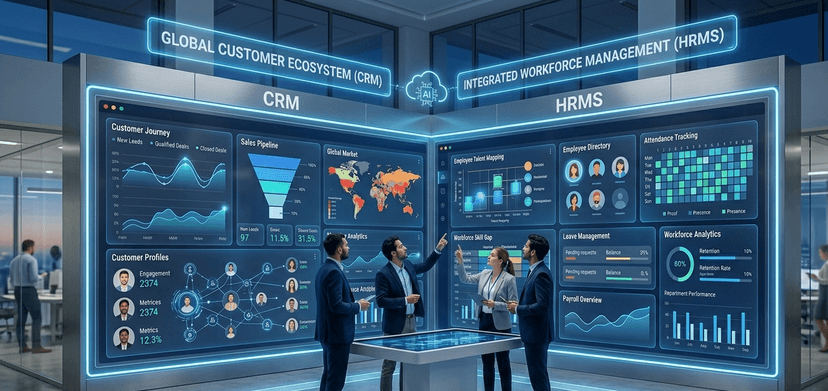
Why Every Business Needs a CRM and HRMS System in 2026
In today’s rapidly evolving business environment, organizations are under constant pressure to improve efficiency, enhance customer experiences, and manage their workforce effectively. As businesses continue to embrace digital transformation in 2026, two systems have become essential for sustainable growth: Customer Relationship Management (CRM) and Human Resource Management System (HRMS).
While CRM helps businesses build stronger customer relationships and drive sales, HRMS streamlines workforce management and improves employee productivity. Together, these systems create a powerful foundation for operational excellence, helping businesses stay competitive in an increasingly digital marketplace.
Whether you are a startup, a growing company, or a large enterprise, investing in CRM and HRMS solutions is no longer a luxury—it is a necessity.
Understanding CRM and HRMS
A CRM system is designed to manage customer interactions, sales processes, marketing campaigns, and customer support activities. It provides businesses with a centralized platform to track customer information, monitor sales opportunities, and improve customer engagement.
An HRMS system, on the other hand, focuses on managing employee-related processes such as attendance, leave management, payroll, recruitment, performance evaluation, employee records, and compliance management.
While these systems serve different purposes, both contribute significantly to improving business performance and organizational growth.
The Growing Need for CRM and HRMS in 2026
Businesses today generate large amounts of customer and employee data. Managing this information manually or through disconnected systems often leads to inefficiencies, errors, and missed opportunities.
With increasing competition, changing workforce expectations, and growing customer demands, organizations need intelligent systems that provide real-time insights and automate routine tasks.
CRM and HRMS platforms help businesses:
- Automate repetitive processes
- Improve decision-making through data analytics
- Enhance employee and customer experiences
- Increase productivity and efficiency
- Support business scalability
- Strengthen organizational performance
Benefits of CRM for Modern Businesses
Improved Customer Relationship Management
Customers expect personalized experiences and prompt responses. A CRM system allows businesses to maintain detailed customer profiles, track interactions, and understand customer preferences.
This enables sales and support teams to provide more relevant and timely services, resulting in stronger customer relationships and higher satisfaction levels.
Better Sales Management
A CRM platform helps businesses organize and manage their sales pipeline efficiently. Sales teams can track leads, monitor opportunities, schedule follow-ups, and forecast revenue more accurately.
By having complete visibility into the sales process, businesses can identify bottlenecks and improve conversion rates.
Enhanced Customer Support
Providing excellent customer support is crucial for retaining customers. CRM systems help support teams access customer histories, resolve issues faster, and ensure consistent communication.
Quick and effective support leads to increased customer loyalty and positive brand perception.
Data-Driven Decision Making
CRM systems collect valuable customer data that can be analyzed to identify trends, buying behaviors, and market opportunities.
Business leaders can use these insights to make informed decisions, optimize marketing strategies, and improve customer engagement efforts.
Increased Revenue Growth
By improving lead management, customer retention, and sales efficiency, CRM systems directly contribute to business growth and revenue generation.
Organizations that effectively manage customer relationships often experience higher customer lifetime value and increased profitability.
Benefits of HRMS for Modern Businesses
Streamlined Employee Management
Managing employee records manually can be time-consuming and error-prone. An HRMS centralizes employee information, making it easier to access, update, and manage workforce data.
HR teams can focus more on strategic initiatives rather than administrative tasks.
Automated Attendance and Leave Management
Tracking attendance, leave requests, and working hours manually often leads to inaccuracies.
An HRMS automates these processes, ensuring accurate records while reducing administrative workload. Employees can submit leave requests digitally, and managers can approve them efficiently.
Efficient Payroll Processing
Payroll management is one of the most critical HR functions. Errors in payroll calculations can affect employee satisfaction and compliance.
An HRMS automates salary calculations, deductions, overtime, tax management, and payroll reporting, reducing errors and saving valuable time.
Improved Employee Experience
Employees expect modern workplaces that provide convenience and transparency.
Features such as employee self-service portals allow staff to access payslips, attendance records, leave balances, and personal information anytime, improving employee satisfaction and engagement.
Better Workforce Analytics
HRMS platforms provide valuable insights into workforce performance, attendance patterns, turnover rates, and employee engagement.
These insights help organizations make informed decisions regarding recruitment, workforce planning, and employee development.
Compliance and Risk Management
Businesses must comply with various labor laws, payroll regulations, and workplace policies.
An HRMS helps maintain accurate records, generate compliance reports, and reduce the risk of regulatory violations.
Why CRM and HRMS Work Better Together
Although CRM and HRMS serve different business functions, integrating both systems creates significant advantages.
When customer-facing teams and HR departments operate with connected data and streamlined workflows, organizations experience:
- Improved collaboration across departments
- Greater operational efficiency
- Better workforce planning
- Enhanced customer experiences
- Faster business growth
- More accurate reporting and analytics
For example, a growing company can use CRM data to forecast future sales demands while using HRMS data to plan workforce requirements and recruitment strategies accordingly.
This alignment ensures that business growth is supported by the right talent and resources.
Challenges Businesses Face Without CRM and HRMS
Organizations that continue relying on manual processes often struggle with:
- Lost customer information
- Inconsistent customer communication
- Poor sales visibility
- Payroll errors
- Attendance tracking issues
- Inefficient HR operations
- Limited business insights
- Increased administrative workload
These challenges can negatively impact productivity, customer satisfaction, and overall business performance.
As businesses become more data-driven, operating without CRM and HRMS systems can place organizations at a significant competitive disadvantage.
Key Features to Look for in 2026
When selecting CRM and HRMS solutions, businesses should prioritize features such as:
CRM Features
- Lead management
- Sales pipeline tracking
- Customer interaction history
- Marketing automation
- Customer support management
- Reporting and analytics
- Mobile accessibility
- Integration capabilities
HRMS Features
- Employee management
- Attendance tracking
- Leave management
- Payroll automation
- Overtime management
- Performance evaluation
- Employee self-service portal
- Workforce analytics
- Role and user management
- Compliance reporting
Choosing scalable solutions ensures that the system can support future business growth and changing operational needs.
The Future of Business Management
The business landscape in 2026 is increasingly driven by automation, artificial intelligence, cloud computing, and data analytics. Organizations that adopt modern CRM and HRMS solutions are better positioned to adapt to these changes and remain competitive.
These systems not only improve day-to-day operations but also provide the foundation for long-term digital transformation and sustainable growth.
Businesses that invest in the right technology today will be more agile, productive, and customer-focused in the future.
Conclusion
CRM and HRMS systems have become essential tools for businesses seeking growth, efficiency, and long-term success in 2026. While CRM strengthens customer relationships and drives revenue, HRMS enhances workforce management and employee productivity.
Together, they create a connected, data-driven environment that supports smarter decision-making, improved operational performance, and better business outcomes.
Organizations that embrace CRM and HRMS solutions can streamline operations, improve customer and employee experiences, and build a strong foundation for future growth. In an increasingly competitive digital world, these systems are no longer optional. They are critical components of modern business success.
Read More
Products
Services
What We Offer
Contact Us
- Dome Info Pvt. Ltd...
- Kathmandu, Nepal
- Phone: +977-9851173669
- Email: info@dome.com.np
Reviews
- 5 stars

- 5 stars

- 4 stars

© 2026 Dome Info. All Rights Reserved.